
Annihilated Hero Route Guide: The Silent Carry
What changes on the Annihilated Hero route: a partner who can only say yes or no, the strongest survivability, and how to read a six-hour silent story.
Quick answer: The Hero route follows the party's leader, who has lost the ability to speak beyond yes and no but can still shrug off death in combat. It is the most forgiving route mechanically and the most restrained one emotionally, because every conversation is filtered through a partner who can barely answer.
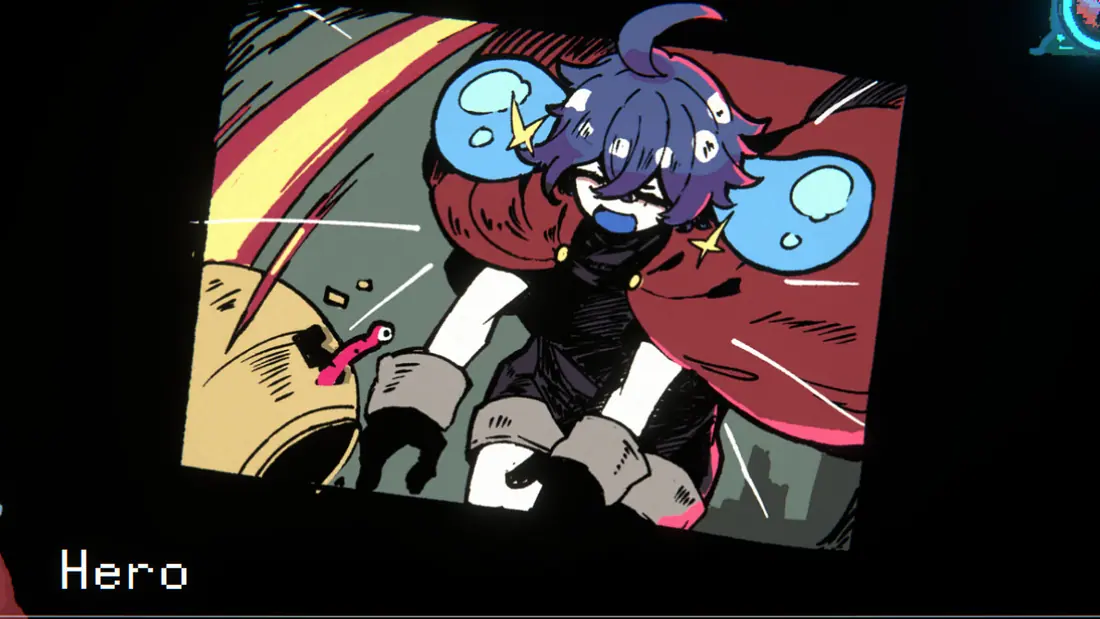
The Hero is the first partner most players meet and the easiest to underestimate. A character who says only yes or no sounds like a joke. Six hours of it is not a joke; it is a writing constraint that turns every question into a small horror.
What did the Hero lose?
The ability to speak. The Hero can produce yes, no, and apparently a very loud "YES!!!!!!!!!!!!!!!!!!" when the situation calls for it. That is the entire verbal range.
The route's drama comes from the gap between what the Hero clearly understands and what the Hero can express. You are carrying someone who knows the answers and cannot give them to you.
That makes the Hero route the most introspective of the four. The other partners explain, argue and narrate. The Hero listens, and you have to interpret.
How does the Hero fight?
The store's description is blunt: the Hero shrugs off death. That is the route's combat identity. The Hero is the partner who keeps standing when the turn goes wrong, which gives you room to learn the break loop.
Practical effects for a first run:
- You can afford one more mistake per boss than you could with a fragile partner.
- You can spend Curses on offense occasionally, because the Hero's survivability covers some of the risk.
- You still need healing. Shrugging off death is not the same as healing, and the Priest is not on your route.
The Hero pairs well with aggressive finisher decks. If your plan is to hold a weapon at one use and race the stagger gauge, the Hero is the partner who keeps the plan alive through a bad telegraph.
What is the Hero route about?
It is about the cost of being the one who survives. The Hero led the party into the dungeon, the party was broken, and you are the rescue team's last survivor carrying the leader out. Neither of you is innocent and neither of you can explain the other.
The store says the routes are complete stories, not fragments. The Hero route is not the "default" route that the others correct. It is one answer to the question the premise asks: what do you owe the person you carry?
Expect the route to lean on implication rather than exposition. If you want answers delivered in dialogue, this is the hardest route to read. If you want a story that trusts you to notice things, this is the one.
Who should pick the Hero route first?
Pick the Hero if:
- You want the most forgiving combat partner while you learn stagger and finishers.
- You like quiet protagonists and ambiguous dialogue.
- You want the most straightforward "carry the leader" version of the premise.
Do not pick the Hero if you want a talkative partner who explains the dungeon. The Mage exists for that.
How should you handle the ending on this route?
The store says the ending depends on how you feel and on the trust, doubt or dependence that grows with your partner. The Hero route makes that literal, because the relationship is built through yes-or-no answers and your interpretation of them.
For a first playthrough, answer as you actually feel. Optimizing a relationship with a partner who cannot explain themselves produces a story you did not choose. The endings guide→ covers the general structure without spoiling route-specific outcomes.
The Hero route hides characterization in the questions you ask, not the answers you get. The choice of what to ask is your character's voice.
Official source: Annihilated on Steam ↗

Does the Hero route have unique combat mechanics?
The confirmed difference is the survivability trait, not a separate combat system. The Hero does not add a new card type or a new resource. The route's uniqueness is narrative and difficulty-shaped.
That is good news for a first run: you do not need to learn a second combat language. You need to learn the one everyone shares, and the Hero forgives you while you do.
What is the Hero's relationship with the other partners?
The other three are in the dungeon regardless of your route. On the Hero route, they are the people you did not carry, which the ending is aware of.
Do not expect a route to explain the other three's secrets. Each route is a complete story, and the store's 200,000+ word count is spread across four different versions of the same rescue.
The Priest route→ is the other support-heavy path, and the endings guide→ explains how trust and doubt change the outcome.
FAQ
Can the Hero speak at all?
The Hero can say yes and no, and can shout an emphatic "YES". Anything more complex is not available, which is the route's central constraint.
Is the Hero route the easiest?
It is the most forgiving in combat because of the survivability trait. It is not necessarily the easiest emotionally, because the dialogue is indirect.
Does the Hero route spoil the others?
It is a complete story, not a puzzle piece. Playing it first does not ruin the Mage, Warrior or Priest routes.
How long is the Hero route?
About six hours, per the store's route estimate. The full script across four routes is 200,000+ words.