
Annihilated Mage Route Guide: Knowledge Without Magic
The Annihilated Mage route: a partner who lost magic but kept knowledge, how that changes exploration and traps, and why this is the information route.
Quick answer: The Mage route pairs you with a partner who has lost the ability to cast but keeps every bit of arcane knowledge. It is the information route: fewer combat crutches than the Hero or Priest, more context about the dungeon, its traps and its rules, and a story about expertise without power.
The Mage is the most classically tragic of the four. A wizard without magic is a scholar with useless hands and a very useful memory. The route leans into that gap: what the Mage knows still matters, even though what the Mage could do is gone.
What did the Mage lose?
Magic. Not knowledge, not memory, not the ability to read a room. The Mage can still identify a trap, explain a monster's behavior and recognize a bad idea. They simply cannot cast their way out of it.
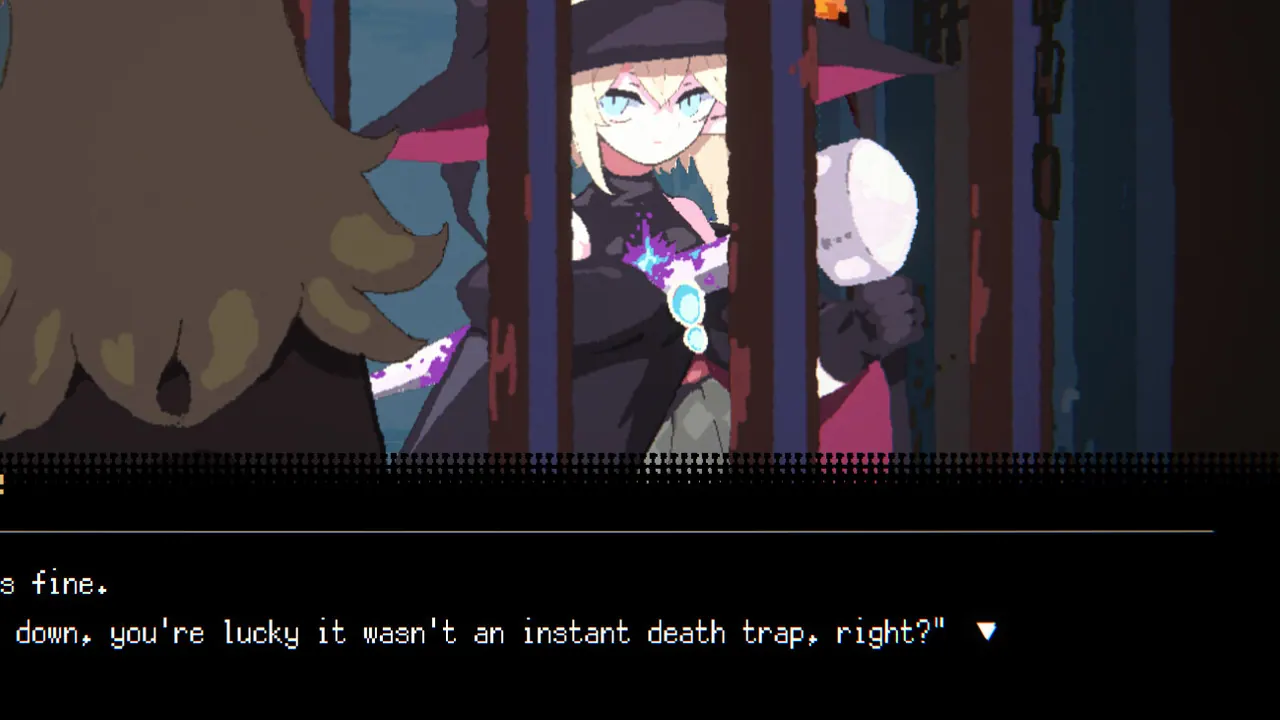
The demo dialogue captures the tone: "It's fine. Calm down, you're lucky it isn't an instant death trap, right?" That is a person who knows exactly how bad things could be and is trying to keep the party calm.
That line also tells you the dungeon contains instant-death traps, and that the Mage is your early-warning system.
How does knowledge play out in combat?
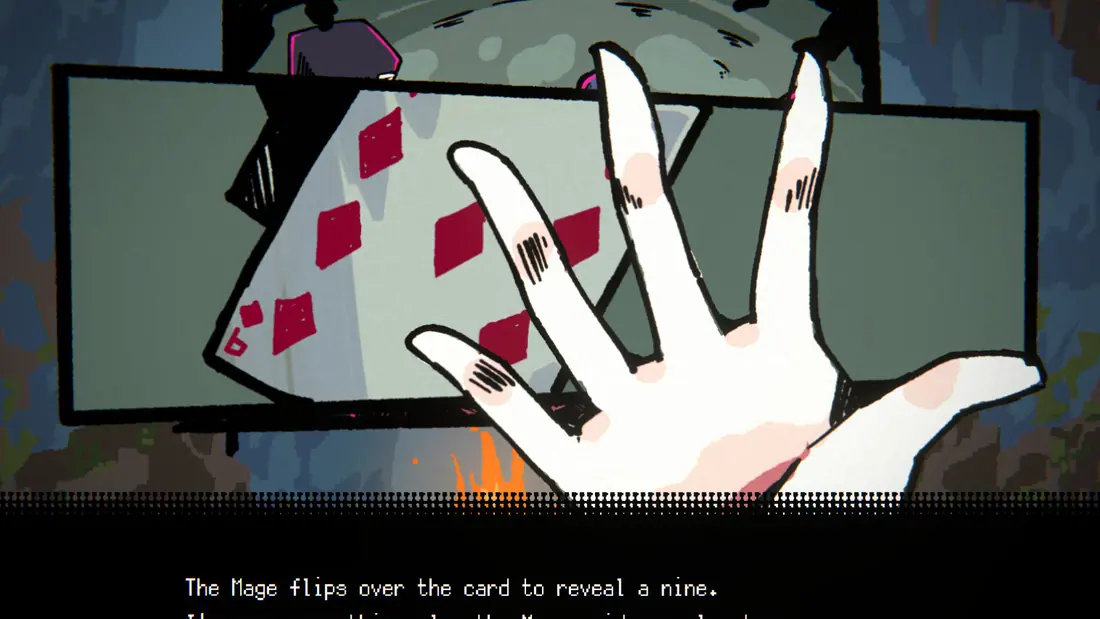
The Mage's confirmed combat contribution is less direct than the Hero's survivability or the Priest's healing. Knowledge shows up as information: enemy behavior, trap warnings, and the kind of callouts that let you plan a turn instead of reacting to one.
In practice, the Mage route rewards a player who reads the telegraph and plans two turns ahead. You are not given a safety net; you are given a better map. If you already understand stagger and finisher timing, that is enough. If you do not, the Mage route is a harsher teacher than the Hero route.
The Mage pairs well with probability style. If the wheel is going to add variance, knowing what the enemy will do next is the best way to decide when a spin is worth the risk.
What is the Mage route about?
It is about expertise without agency. The Mage understands the dungeon better than anyone and cannot change it. You are the hands; the Mage is the knowledge, and the route asks what happens when those two things have to trust each other.
The store's relationship framing applies here more than anywhere: trust, doubt or dependence grows between you, and the ending follows. A partner who is always right is easy to depend on and hard to trust, because you cannot verify what you are being told.
Expect the route to test whether you believe the Mage. That is the dramatic engine.
How should you play the Mage route?
Three habits:
- Ask before you touch. The Mage's value is in warnings. If a room looks wrong, the route's dialogue usually tells you why.
- Plan the break two turns ahead. Without a healing or survivability crutch, you cannot afford to improvise the finisher.
- Keep a Curse buffer for traps. Instant-death traps are exactly the "worst possible result" that Defy fate is designed to cancel.
The Mage route is the best argument for reading the combat guide→ before you start. Information is the partner's whole identity, and the combat layer uses the same logic.
Who should pick the Mage route?
Pick the Mage if:
- You want the dungeon explained rather than survived by brute force.
- You like a partner whose competence is intellectual, not physical.
- You are comfortable with a slightly tighter combat curve.
Do not pick the Mage if you want the most forgiving first run. That is the Priest or the Hero. The Mage is the route for a player who wants to understand the systems, not bypass them.
Does the Mage route have unique mechanics?
No separate combat system is confirmed. The route's uniqueness is narrative and informational: more context, more warnings, and a partner whose dialogue is dense with rules.
That is consistent with the game's design. The four routes share the card economy, the stagger loop and the Curse system. The partner changes what you know and what you can afford, not the rules of the fight.
The Mage can tell you a trap is lethal. The Mage cannot stop it. Keep a Curse for the moment when knowing is not enough.
Official source: Annihilated on Steam ↗
How does the Mage route handle endings?
The ending follows the same relationship axis as the other routes: how you feel about the Mage, and whether the bond becomes trust, doubt or dependence. The Mage's arc makes that axis unusually sharp, because dependence on a partner who is always right is a real temptation.
For a first run, decide early whether your character believes the Mage. Consistency produces a clearer ending than hedging every conversation.
What is the Mage's relationship to the party?
The Mage was part of the hero's party. Whatever happened in the dungeon cost them their magic, and the route's conversations circle that loss without necessarily explaining it in the first hour.
The store's promise is 200,000+ words across four routes. The Mage route's share is a complete story, not an appendix. Do not expect the other routes to be required reading.
The Warrior route→ is the louder counterpart, and the walkthrough→ shows where the Mage's knowledge pays off.
FAQ
Can the Mage still cast spells?
No. The Mage has lost magic entirely. The knowledge remains, which is the route's whole premise.
Is the Mage route harder than the Hero route?
It is less forgiving in combat because the Mage does not provide the Hero's survivability or the Priest's healing. The information advantage helps, but it does not heal a bad turn.
Does the Mage know the dungeon's layout?
The Mage has knowledge of the dungeon and its rules, which the route uses for warnings and context. The exact scope is route content, not a store-level feature.
How long is the Mage route?
About six hours, matching the store's estimate for each route.